
Oct 29, 2025
Ozone Water for Floors & Entrance Zones: Stable Walkability
Floors demand predictable grip and a clean walkline; ozone water supports this without residue build-up.
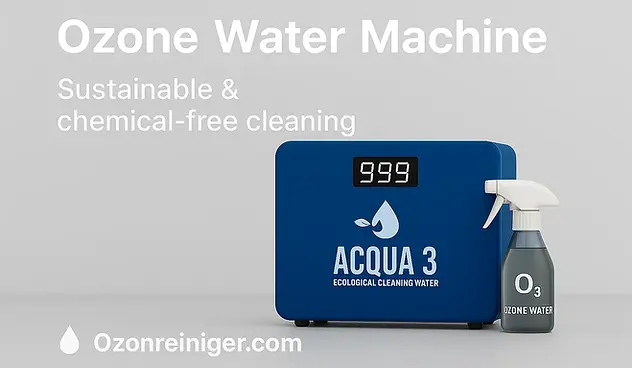
Ozone water for floors and entrances. Thin-film application, routing, fewer corrective deep cleans. Surface cleaning only; not for consumption or medical purposes.
Ozone Water for Floors and Entrance Zones
Ozone Water for Floors and Entrance Zones
Floors are read by footfall. Stability comes from eliminating residue so the surface behaves predictably across shifts.
Where floor issues really start
Most floor problems originate from thin residue layers that bind new soil. Ozone water resets the surface to neutral, avoiding build-up.
Workflow: thin-film, not saturation
Apply a light, even film: cover the zone, allow contact, then stabilise. This mirrors the logic of the Two-cloth method.
See practical segments in ozone water floor cleaning, and crossover guidance in window cleaning and facade cleaning.
Routing: where the result becomes predictable
Close multi-entry areas with one unified final pass to eliminate overlap lines. Path determines quality, not liquid volume.
Material behaviour and transitions
PU, epoxy, linoleum, PVC, terrazzo, sealed concrete: consistent response because no film is left behind. Thresholds benefit most.
See also: floor cleaning · two‑cloth method · glass & crossover · facade/threshold
Why total lifecycle cost is lower
Production is about €0.0017 per litre. Savings come from fewer deep cleans, less stock handling and faster return to service. This use of ozone water is limited to surface cleaning. It is not meant for consumption or for any medical claim.
Cross‑language
Available as a three‑language hub: NL / EN / DE with canonical guard.
Further reading
What is ozone water?
Ozone water machine
Guides
Contact
Two‑cloth method