
Oct 19, 2025
Ozone water machine in enterprise offices: workplace use
This guide explains a neutral, technical approach to using an ozone water machine for surface cleaning across enterprise office workplaces, meeting rooms and shared equipment. Scope is strictly limited to closed, wipeable surfaces suitable for wet cleaning—no food or hygiene claims. The standard wording applies: “Spray onto the cloth for controlled use, or directly onto closed surfaces (such as tables, floors or tiles).” The default workflow is the two-cloth method: 1) mist lightly onto the surface; 2) wipe in overlapping strokes; 3) dry immediately with cloth B for a streak-free result. We use a route-based zone sequence (W1) that fits opening/peak/closing routines. Material compatibility (HPL, coated wood, stainless steel, glass) and spot-testing are covered, along with short-cycle touchpoint care. Costs remain predictable thanks to on-site generation and minimal logistics; maintenance centers on a few wear parts. Our ozone water from the ozone water machine is intended for surface cleaning only. Not for consumption or medical uses.
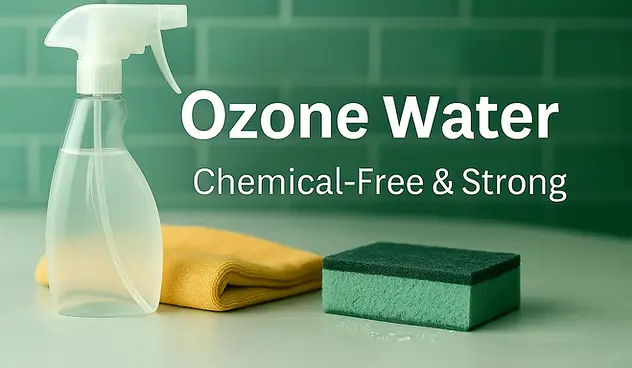
Neutral guide to large-office deployment of an ozone water machine in 2025: safe, cost-aware and compliant, focused on closed surfaces.
Workplace application
Ozone water machine for enterprise offices: workplaces & meetings
This guide describes a neutral, technical approach to surface cleaning with an ozone water machine in large office environments. Scope is limited to closed, wipeable surfaces such as desks, meeting tables, chair arms, door handles, light switches, device housings and handrails. No food or hygiene claims are made.
Safe application and two-cloth workflow
Spray onto the cloth for controlled use, or directly onto closed surfaces (such as tables, floors or tiles). Apply the two-cloth method — 1) Lightly mist the surface. 2) Wipe in overlapping strokes. 3) Dry immediately with cloth B for a streak-free finish. Work clean-to-less-clean: touch points → furniture → wet areas.
- Short, targeted mist for controlled landing.
- Cloth A: apply/loosen; Cloth B: immediate dry-wipe.
- Suitable for HPL, stainless steel, glass, coated wood and tiles.
- Avoid porous or moisture-sensitive materials.
Our ozone water from the ozone water machine is intended for surface cleaning only. Not for consumption or medical uses.
Zone sequence (W1): from entry to shared equipment
Use a fixed route to keep rounds repeatable and scalable. This simplifies task division in facility teams and reduces missed areas.
- Entry & reception: counters, waiting areas, handrails, lift buttons.
- Open work areas: desks, chair arms, drawer handles.
- Focus/quiet zones: desk surfaces, partition walls (closed finish).
- Meeting rooms: tables, door handles, remotes.
- Shared equipment: printers, terminals, phones, docks.
- Restrooms (staff/visitors): door handles, dispensers, flat surfaces.
Material compatibility & parameters
For new or sensitive finishes, spot-test first. Use a fine mist and avoid overwetting. Keep nozzles clean for an even spray pattern.
- Stainless/HPL: short, even passes.
- Coated wood: minimal application, immediate drying.
- Glass: apply to the cloth to avoid streak starts.
- Tiles/stone with coating: always spot-test.
Daily routines & integration
Opening: check bottles, cloths and machine readiness. Peak: quick touchpoint cycles without interrupting work. Closing: systematic route; refresh cloths and stage tools.
- Opening check: filled bottles, clean cloths, machine OK.
- Peak: short touchpoint cycles per zone.
- Closing: fixed route from entry → restrooms.
Costs and affordability
For only €0.0017 per liter, you produce your own cleaning water directly from the tap.
- ✅ No expensive bottles or logistics
- ✅ Less plastic and storage
- ✅ Easy to use
- After about 1000 hours or 500,000 liters, maintenance is needed, averaging €75 for parts.
Training & quality
Train teams on spray distance, cloth order and zone planning. Keep checklists short and routes constant to reduce errors and improve predictability.
Internal references
Learn more via What is ozone water, Ozone water machine, Guides and Contact.
Further reading
What is ozone water?
Ozone water machine
Guides
Contact