
29 okt 2025
Ozone water in hospitality: safe surface application
Ozone water is generated on-site from tap water and is intended for routine surface cleaning in both front-of-house and back-of-house areas, without storage or packaged supplies.
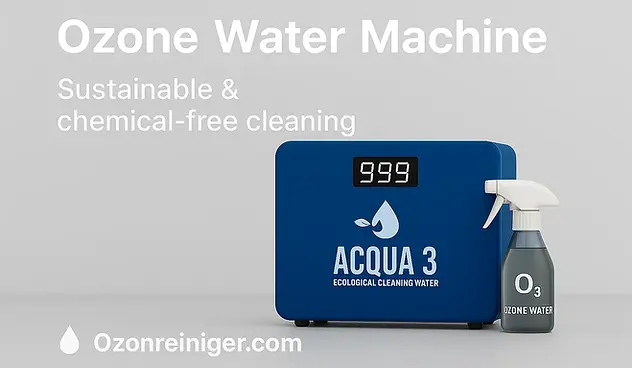
Ozone water in hospitality: practical, locally generated surface application for daily routines in guest and back-of-house areas; storage-free and procedure-friendly.
Ozone water in hospitality: safe surface application
Ozone water in hospitality: safe surface application for professional environments
In hospitality environments, consistency, control and repeatability are key factors in daily surface care. Ozone water supports this workflow by providing a locally generated cleaning solution that can be used on hard, closed surfaces at the moment it is needed. It does not require storage or packaged product handling and can be integrated smoothly into existing front-of-house and back-of-house procedures. Because it is created directly from tap water, it supports the day-to-day operational routine without changing the rhythm of the workplace.
Why safety matters in a hospitality setting
Hospitality locations experience continuous contact between guests, staff and surfaces. Countertops, bar fronts, tabletops, service stations, payment points, door handles, preparation counters and other touchpoints are used repeatedly throughout the day. A surface cleaning method that is locally generated and easy to apply helps maintain clarity and control over the process. Ozone water is used exclusively for surface cleaning and is not positioned as a food-contact or health-related product. Its role is practical and procedure-based: quick to access, simple to reapply and aligned with the structured flow of service routines.
Front-of-house and back-of-house relevance
In guest-facing areas, presentation and consistency are a core part of the experience. Surfaces need intermittent attention between seatings, at handover points or during service transitions. Being able to clean without transporting chemical containers or retrieving stock makes the process faster and more predictable. In back-of-house areas, the advantage is similar: worktops, staging counters, plating zones, storage surfaces and contact points can be refreshed without interrupting preparation tasks or navigating storage routines. Because the product is generated locally, there is no dependency on bottle management, packaging logistics or replenishment planning.
Operational simplicity
The principle behind ozone water in hospitality is straightforward: a single appliance converts tap water into a cleaning solution that can be used immediately for surface application. There is no need for dilution, refilling cartridges or mixing steps. This simplicity reduces friction during peak hours and supports consistent cleaning habits. The system aligns with the usual hospitality practice of applying, wiping and drying — making it easy for both new and experienced team members to apply the same routine without additional explanation.
Daily workflow alignment
Hospitality service cycles move in layers: pre-opening checks, guest arrival, table turnover, bar service, mid-shift resets and closing routines. A locally generated surface solution supports each of those touchpoints without requiring storage or retrieval. Instead of depending on whether supplies are stocked or delivered on time, the workflow becomes part of an on-demand approach: generate, apply, wipe and continue. This matches the natural rhythm of hospitality work and makes the process adaptable to changing guest volume throughout the day.
Supporting a predictable and repeatable routine
One of the key advantages for hospitality operators is predictability. Because the system is always available at the point of use, there is no waiting, tracking or resupply planning. Staff can maintain surfaces throughout the shift in a controlled and repeated way, without storage overhead. This reinforces internal consistency and can reduce miscommunication between teams during handovers. Whether the location operates a single counter service or a multi-zone hotel environment, the approach remains the same: quick access, controlled surface application and a repeatable method.
Learning curve and team adoption
Teams in hospitality environments often work across multiple roles and service flows. A method that does not require special handling or additional onboarding is therefore easier to adopt. Ozone water use aligns with existing habits: apply → wipe → dry. Because there is no mixing step or packaging disposal, new team members can integrate it into their daily routine with minimal introduction. The local generation aspect also removes the question of where cleaning product stock is stored or how often it must be topped up, simplifying internal logistics.
Reference sources
For background on how the water is generated, there is an overview at What is ozone water?. For information on available systems, see Ozone water machine. A broader set of use-cases is available under Guides. For direct demonstration inquiries, the contact point is available via Contact.
Chemical-free surface care
Ozone water is generated directly from tap water, which reduces the need for prepackaged cleaning products. It provides a practical solution for daily surface care in both guest-facing and back-of-house areas without storage or residual packaging. The application remains simple and locally controlled, making it suitable for routine use throughout the hospitality workflow.
Cost and affordability
The cost per liter is extremely low because the water is produced on demand from a standard tap source. For many operators this removes the need for frequent supply ordering or delivery scheduling, while also reducing storage space requirements. Long-term use involves minimal replacement parts, which helps maintain predictable operational costs over time.
✅ No recurring packaging logistics
✅ Less storage dependency
✅ Chemical-free application
✅ Fits into daily routines
Maintenance is typically required after extended appliance usage, depending on volume and operational hours.
Workflow and application
The method follows a practical sequence: apply the water to a cloth for controlled use, or spray directly on hard closed surfaces. The wiping step removes visible residue, and a second pass with a dry cloth ensures a uniform finish. This matches common hospitality routines and fits both quick resets and scheduled cleaning moments. A step-by-step demonstration is available in the guide for the two-cloth method via Two-cloth method.
Cross-language availability
This article is also available in:
Nederlandse versie
Deutsche Version
Further reading
What is ozone water?
Ozone water machine
Guides
Contact
Frequently Asked Questions