
11. Dez. 2025
Cleaning with ozone water: practical everyday guide
Learn step by step how to clean with ozone water in practice: from filling points and routes to the two-cloth method on tables, floors and other closed surfaces.
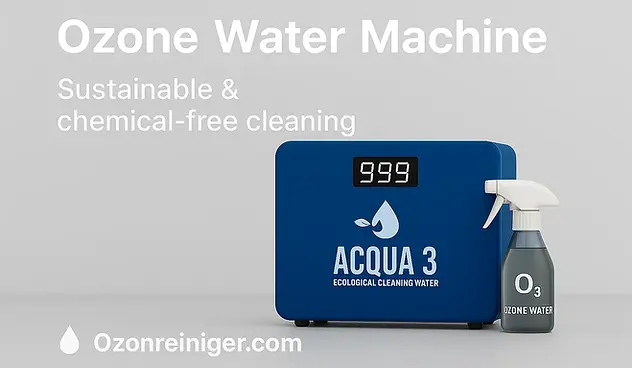
Discover how to build safe, efficient cleaning routines with ozone water: clear workflows, fixed routes and practical tips for daily surface cleaning.
Cleaning with ozone water in practice: step-by-step guide
Cleaning with ozone water in practice
Ozone water becomes truly useful once you know exactly how to use it in daily cleaning. With an ozone water machine you produce cleaning water on site from ordinary tap water. The result is ozone water, water in which ozone is temporarily dissolved. You only use it for daily surface cleaning of closed surfaces such as tables, floors and tiles – never for drinking or medical purposes.
Part of a wider guide series
This practical guide is part of a wider series on smart and cost-efficient cleaning with ozone water. The guide on affordable cleaning solution with ozone water explains how the base product works and what it costs per litre. The guide on cleaning on a budget with ozone water focuses on organisation and stock. The guide why clean with ozone water looks at the underlying reasons. The main guide cleaning with ozone water brings the series together; this article translates it into a concrete working method.
Step 1: Organise filling points
Start with a clear filling point for ozone water. That is where staff fill their spray bottles and buckets. Place it logically along daily cleaning routes.
- Install the ozone water machine in a fixed, easily accessible location.
- Provide clear on-site instructions for filling and safety.
- Work with reusable spray bottles and buckets as much as possible.
For more technical background, see What is ozone water? and the product page of the ozone water machine.
Step 2: Cleaning with the two-cloth method
The core of cleaning with ozone water is a consistent workflow. The two-cloth method gives you a repeatable pattern across different closed surfaces.
- Spray a light mist of ozone water onto the cloth or directly onto the closed surface.
- Clean in overlapping passes with cloth A to remove visible soil.
- Immediately dry with cloth B for a streak-free finish.
You can find all steps in detail in the dedicated two-cloth method guide, which works well as training material for new team members.
Step 3: Apply ozone water per room and surface
Ozone water is designed for closed, wipeable surfaces such as tables, desks, floors and tiles. For each room, decide which surfaces are cleaned with ozone water as standard and where a special product is still needed.
- Offices and workspaces: desks, chairs, door handles and light switches.
- Sanitary areas: tiles, doors and walls (with special products reserved for exceptional tasks).
- Kitchens and pantries: worktops, tables and cupboards (within your surface cleaning guidelines).
Never use ozone water as drinking water and never for medical applications. It is a tool for everyday surface cleaning.
Step 4: Linking ozone water to cleaning routes
Ozone water works best when it is integrated into existing cleaning routes. For each route, make it clear where filling points are, which areas are treated with ozone water and which exceptions apply.
- Map out fixed routes with matching filling moments.
- Define which surfaces in each room are cleaned with ozone water by default.
- Use simple icons or short instructions on the trolley and at filling points.
Step 5: Training and refreshers
Good initial training helps staff understand how and why you clean with ozone water. After that, short refreshers in team meetings are often enough.
- Briefly explain what ozone water is and what it is used for.
- Repeat the two-cloth method until everyone knows the steps.
- Make clear that ozone water is for surface cleaning only.
Link to costs and other guides
This how-to focuses on the practical side of cleaning with ozone water. For costs and litre prices, see the guide on affordable cleaning solution with ozone water. For a broader view on stock and logistics, read cleaning on a budget with ozone water. The guide why clean with ozone water explains the underlying reasons for choosing ozone water.
Safe use and boundaries
Ozone water is not a disinfectant and not a health product. It is a practical tool for daily surface cleaning. Clear instructions help your team use it safely and consistently.
- Use ozone water only on closed, wipeable surfaces.
- Never use it for drinking or medical applications.
- Always work with a fixed workflow, such as the two-cloth method.
Cost and affordability
Because you work with a central ozone water machine, the cost per litre of cleaning water is low and predictable. This guide helps you turn that into daily practice: fewer products on the trolley, fewer plastic bottles and a consistent workflow per team.
- Low litre price combined with calmer storage shelves.
- Fewer separate bottles and less risk of rush orders.
- Clearer insight into usage per site or team.
Customer stories & testimonials
- “By introducing a fixed ozone water route, our cleaning routines have become far more predictable.” – Facilities manager
- “New colleagues master the two-cloth method after a single training session.” – Cleaning team lead
- “We work with fewer different products and our storage looks much calmer.” – Purchasing
💬 Would you like help designing a practical ozone water cleaning setup for your organisation? Browse the products or contact us for tailored advice.
Further reading
Cleaning with ozone water (guide)
Why clean with ozone water
Affordable cleaning solution with ozone water
Cleaning on a budget with ozone water
What is ozone water?
All guides