
Sep 19, 2025
Ozone water degreaser: degreasing surfaces without chemicals
Grease on surfaces is one of the most persistent forms of contamination in professional cleaning environments. In kitchens, production areas, workshops and hospitality environments, grease settles on floors, walls, equipment and worktops. Traditional degreasers work, but they also bring drawbacks: chemical residues, odour issues, material stress and the logistics of storage and dosing. Ozone water offers a different approach to degreasing surfaces. It works without added chemicals, produces no hazardous residues and can be produced on site. For professional cleaning teams who deal with grease contamination daily, it is relevant to understand what ozone water can contribute to this process, where it works well and where its limits lie. Degreasing with ozone water is not a replacement for all degreasing situations. Heavy industrial grease layers or carbonised grease require other methods. But for the daily lighter grease contamination on surfaces in kitchen and hospitality environments, and for maintaining surfaces after a thorough chemical clean, ozone water is an effective addition to the cleaning methodology. The effectiveness of ozone water in degreasing is based on the oxidising action of dissolved ozone. Ozone reacts with organic compounds including fats and oils, breaking down the chemical structure of those compounds. That reaction takes place at the surface of the grease, reducing its adhesion to the underlying material and loosening it for mechanical removal. The speed and completeness of that reaction depends on the thickness of the grease layer, the type of grease and the contact time of the ozone water with the surface. For light grease film on stainless steel worktops, tiled floors or equipment, contact time is short and cleaning is effective. For thicker or deeply ingrained grease layers, reaction time is longer and a combination with mechanical cleaning may be needed. The two-cloth method is particularly relevant when degreasing with ozone water. By applying ozone water directly to the surface to be degreased with one cloth and then removing it with a second clean cloth, maximum contact time is used and the loosened grease is effectively removed. This article provides a complete overview of how ozone water works for degreasing, which surfaces and situations it is most suited to, what its limits are and how to use it as part of a professional cleaning routine. Knowledge of the possibilities and limits of ozone water in degreasing is the basis for well-considered use in the daily cleaning practice of professional cleaning teams and facility service providers on the work floor Knowledge of the possibilities and limits of ozone water in degreasing is the basis for well-considered use in the daily cleaning practice of professional cleaning teams and facility service providers on the work floor Knowledge of the possibilities and limits of ozone water in degreasing is the basis for well-considered use in the daily cleaning practice of professional cleaning teams and facility service providers on the work floor Knowledge of the possibilities and limits of ozone water in degreasing is the basis for well-considered use in the daily cleaning practice of professional cleaning teams and facility service providers on the work floor Knowledge of the possibilities and limits of ozone water in degreasing is the basis for well-considered use in the daily cleaning practice of professional cleaning teams and facility service providers on the work floor Knowledge of the possibilities and limits of ozone water in degreasing is the basis for well-considered use in the daily cleaning practice of professional cleaning teams and facility service providers on the work floor Knowledge of the possibilities and limits of ozone water in degreasing is the basis for well-considered use in the daily cleaning practice
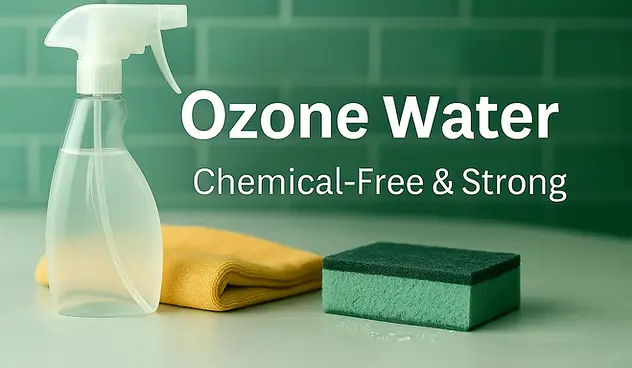
Explanation of using ozone water as a degreaser in professional cleaning environments: how ozone reacts with grease, which surfaces it works on, what its limits are and how to use it in the work routine.
Ozone water as a degreaser: action, applications and limits in professional cleaning practice
How ozone water reacts with grease
Dissolved ozone is a strong oxidising agent that reacts with organic compounds including fatty acids and lipids. That reaction takes place at the surface of the grease layer and weakens the chemical bond between the grease and the underlying material. The grease loosens and can then be mechanically removed with a cloth. Reaction speed depends on the ozone concentration in the water, contact time and the nature of the grease. More on the ozone water machine: ozone water machine.
Which grease contamination ozone water works best on
Ozone water is most effective on light to moderate grease contamination: daily deposits on worktops, splatter grease on equipment surfaces and thin grease film on floors and walls. For these applications contact time is short and cleaning is effective without additional chemicals.
For heavy grease contamination, such as thick burnt layers on hobs or industrial grease on machine parts, ozone water is not sufficient as the only treatment. It can however be used as a maintenance agent after a thorough chemical degreasing to keep surfaces clean daily.
The two-cloth method for degreasing
The two-cloth method is the standard working method when degreasing with ozone water. Apply ozone water with the first cloth, let it act briefly and then remove the loosened grease with the second clean cloth. This prevents spreading of grease and maximises contact time with the surface. More on the method: two-cloth method.
Applications per environment and surface
This cluster describes ozone water as a degreaser in five specific contexts. The sub-articles go deeper into each area:
How it works: ozone water degreasing how it works. Kitchen: ozone water degreasing kitchen. Industrial: ozone water degreasing industrial. Versus chemical: ozone water degreasing vs chemical. Surfaces: ozone water degreasing surfaces.
The ozone cleaner in use
More on the ozone water machine and how the device produces ozone water for professional cleaning applications. Full overview: ozone water knowledge guide.
Costs and affordability
Ozone water as a degreaser reduces consumption of chemical degreasers and associated procurement costs, storage logistics and safety measures. As a complement to the existing cleaning routine the additional investment is minimal while operational costs per cleaning cycle decrease. Questions? Contact us via the contact page.
Testimonials
💬 "We now use ozone water daily after the morning service to keep worktops and equipment grease-free. We only use the chemical degreaser once a week for thorough cleaning. That saves considerably in consumption and time." — Kitchen coordinator, catering company
Further reading: previous cluster
For background on water pressure and safe use of the ozone cleaner: water supply ozone cleaner pressure update.