
30 okt 2025
Ozone water device maintenance: clean generator cell, seals and replace parts
Maintenance of an ozone water device largely determines its service life and consistent performance over multiple years of use, where the three most determining activities consist of the periodic cleaning of the generator cell to remove lime scale and oxidation deposits, the annual inspection and replacement of seals as needed to guarantee leak-free operation, and the timely replacement of wearing parts when production capacity noticeably decreases. Those who consistently keep up with maintenance prevent unexpected downtime, reduce the risk of performance loss through wear and ensure the appliance still operates at the level for which it was purchased even after several years. Cleaning frequency of the generator cell depends on regional water hardness, daily usage intensity and generator type, with hard water areas requiring more frequent cleaning than soft water areas. This page describes the complete maintenance process step by step, the signals that indicate maintenance is needed, the recommended frequency per activity and the specific considerations for hard water regions. After this page, it is fully clear which specific maintenance activities are needed at which moments, how the generator cell cleaning procedure proceeds step by step, which signals the user must recognise as an indication for necessary maintenance, and how the complete annual maintenance session is carried out correctly and efficiently.
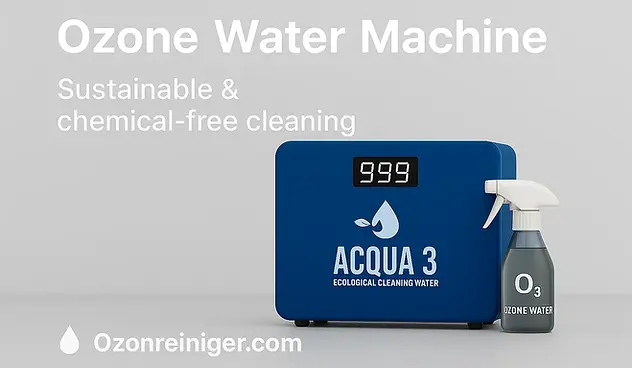
Ozone water device maintenance: guide to cleaning the generator cell, checking seals and replacing parts for lasting optimal performance.
Questions about maintaining an ozone water device?
Why is regular maintenance needed?
Water and electrical discharge are the two elements that make ozone production possible, but also the two elements that cause deposits and wear over time. Lime build-up from hard tap water and oxidation deposits from the production process gradually reduce cell efficiency. Those who keep up with maintenance correct this in time. Those who skip it accept gradually diminishing performance.
This subpage belongs to the hub ozone water device usage guide. For installation steps, ozone water device installation is the preceding subpage. The comparison cluster provides context on generator types and how they influence maintenance frequency.
Cleaning the generator cell: step by step
Step 1 is shutting off the water supply and disconnecting the appliance from the power supply. Step 2 is removing the generator cell according to the instructions in the manual. For most models this is a straightforward action without tools. Step 3 is immersing the cell in a cleaning solution such as citric acid solution for the time specified by the manufacturer.
Step 4 is rinsing the cell with clean water after immersion. Step 5 is replacing the cell and restoring all connections. Step 6 is carrying out a flushing procedure of the appliance before returning it to normal use. The ozone water machine page offers supplementary technical context.
Cleaning frequency per water type
In soft water areas up to 10 degrees dH, once a year is sufficient for normal domestic use. In moderately hard water of 10 to 20 degrees dH, twice a year is recommended. In hard water above 20 degrees dH, three to four times a year may be needed. Those who do not know the water hardness in their region can request it from the regional water company.
A simple indicator: if white or grey powder-like deposits are visible on the cell after removal, lime scale is present. Brown or yellow deposits are oxidation. Both are removable with the standard cleaning procedure. When lime scale is frequent, a shorter cleaning interval is worthwhile.
Signals indicating maintenance is needed
The appliance gives three main signals when maintenance is needed. A noticeable decrease in output at unchanged use is the most direct signal. A longer time to reach the desired concentration is a secondary signal. A change in the smell of the working liquid is a third signal that calls for attention.
Those who observe two or more of these signals simultaneously have certainty that cell cleaning is needed. Those who observe only one signal first check that water supply works correctly and pressure is sufficient. Only if water supply and pressure are fine is cell cleaning the likely solution. For uncertain cases, contact is available.
Inspecting and replacing seals
Seals are small but critical parts that guarantee leak-free connections. They are made of rubber or polymers that can degrade over time from the presence of ozone in the water flow. An annual visual inspection for hardening, discolouration, deformation or cracking is sufficient for early detection.
An early sign of seal wear is a small damp spot at a connection point after use. Those who notice this dry the spot, wait five minutes and check again. If moisture returns, seal replacement is needed. Replacement is in most cases a user task with original replacement parts available from the supplier.
Replacing the generator cell
The generator cell has a limited service life that varies per model and usage intensity. Manufacturers give a replacement recommendation based on litres produced or years of use. Replacing the cell on time prevents gradually worsening performance without a clear cause. For most models this is a user action without tools described step by step in the manual.
When ordering a replacement cell, verify that the part is compatible with the specific model type and serial number. A wrong cell cannot be installed or does not work correctly. Ordering from the original supplier or manufacturer guarantees compatibility without risk of ordering an incorrect part.
Maintaining filters
Models with built-in filters require periodic filter replacement or cleaning. The filter protects the generator cell by capturing particles and contaminants in the incoming water before they reach the cell. A clogged filter is recognisable by reduced water pressure at the outlet or a lower output volume at unchanged line pressure.
The manual specifies the filter type, replacement or cleaning procedure and recommended interval. Replacing the filter too late exposes the generator cell to contaminated water, shortening cell service life. Timely filter replacement is therefore also an investment in the longevity of the cell itself.
Planning the annual maintenance session
The most effective approach is a fixed annual maintenance session on a predetermined date. The installation date is the most logical anchor. A calendar reminder one month before that date gives the user time to order replacement parts if needed. The session itself takes thirty to sixty minutes for most domestic models.
The checklist for the annual session is: clean generator cell, inspect seals, check or replace filter, carry out a leak check at all connection points, and check the power connection. Going through the same checklist each year misses nothing. The two-cloth method is the daily working method that can be resumed immediately after a maintenance session. For supplementary tips on daily use, ozone water device tips is a supplementary subpage. Safety information about working on the appliance is at ozone water device safety.
Maintenance for professional use
Professional users have a higher usage frequency and therefore a shorter maintenance interval. At use of one hundred or more tapping moments per day, a quarterly check of the generator cell is a sensible approach. A service contract with a professional distributor provides planned maintenance at fixed intervals without the user needing to plan independently.
Professional users keep a spare cell in stock so a defective or worn cell can be replaced immediately without downtime. Keeping a maintenance log gives insight into parts consumption patterns and helps predict future replacement needs. For advice on professional maintenance schedules, contact is available.
What to do in case of unexpected downtime
If the appliance suddenly stops producing or shows an error, the first step is always to consult the manual. Typically a power interruption, a blocked water supply or an overloaded generator cell is the cause. Systematically going through the most common causes in sequence resolves the issue in most cases without any external help.
If the standard check gives no solution, contacting the service desk is the next step. Document the issue before calling: when did it start, which steps have already been tried, and what is the exact symptom. This significantly speeds up diagnosis by the service desk. The ozone water machine page offers system context that helps with diagnosis.
Maintenance and performance after the service session
Directly after a complete maintenance session, the output of the appliance is typically higher than in the period just before the session. This difference is noticeable in the speed at which the appliance reaches the desired concentration and in the volume per tapping moment. Those who notice this difference have direct evidence of the effect of cleaning on performance.
After the maintenance session, the two-cloth method is also immediately resumed for daily use. The two-cloth method is the standard working method that continues directly after maintenance without any adjustments. For additional usage tips after the maintenance session, ozone water device tips offers extra context.
Cost of maintenance over multiple years
Maintenance of an ozone water device has low annual costs. Citric acid solution for cell cleaning is inexpensive and widely available. Seals as replacement parts cost little. Only generator cell replacement after several years represents a higher one-off cost. Over a five-year period of use, total maintenance costs for domestic use are limited.
Those who calculate total ownership costs over five years including maintenance can compare this with replacement costs of an unmaintained appliance. A well-maintained appliance lasting five to seven years has significantly lower total costs than one replaced after three years due to structural neglect. The generator cell replacement cost once every three to five years falls well within this cost advantage. For more context on models and costs, ozone water device comparison offers supplementary information.
💬 A user describes how a missed maintenance session had directly visible consequences: "After eighteen months without cleaning, output was noticeably reduced. After the cleaning session the appliance performed immediately as at purchase." A user in a hard water region notes: "In our area, cleaning twice a year is really necessary. The manual says annually but that is not enough here." For specific questions, contact is available.
Further reading
This page belongs to the hub ozone water device usage guide. For installation steps, ozone water device installation is the preceding subpage. For usage tips after the maintenance session, ozone water device tips offers further depth.
The guides section offers the complete overview of all clusters for further exploration of the ozone water domain.