
7 feb 2026
Ozone water in a washing machine: low-temperature washing
This page focuses on one practical topic in the “Ozone water in a washing machine” series: how to approach low-temperature programs (such as 20°C/30°C and eco modes) in a process-first way when ozone water is part of your workflow. We stay claim-safe: no statements about hygiene outcomes, disinfection, smell, stains, textile performance, or medical effects. The goal is simply to understand what your machine actually does at low temperature and how to build a repeatable routine. Low temperature is rarely “just less heat”. Many machines compensate with longer run time, different rinse patterns, additional water exchanges, or a different timing of fills and drains. That is why comparisons become unreliable if you change load size, detergent use, extra rinses and programs all at once. The safe approach is a baseline: pick one program you run often, log total duration, observe refill moments where possible, and note which phases take fresh water. Only then do you connect an ozone-water supply (if used) to one defined fill phase so changes remain reproducible and explainable. Treat it as a small system with three layers: (1) the machine (filters, drum, hoses, pump), (2) the program (fill, tumble, rinse, spin), and (3) your routine (sorting, loading, logging, maintenance). With frequent eco/30°C use, maintenance and consistency matter even more: many manufacturers recommend periodic maintenance cycles, simply because usage patterns shift. That is not an ozone claim; it is normal appliance care. This guide gives you practical control points: which variable to change (one at a time), what to log per load (program, options, duration, extra rinse yes/no, deviations), and how to align a household or team on one routine. We also note boundaries: some machines have inlet-pressure and connection limits. Always follow manufacturer guidance, keep maintenance accessible, and avoid improvised fixed installations. To follow the series, start at the hub page and continue to programs & settings, maintenance/self-clean cycles, costs & consumption, and workflow implementation.
A process guide to low-temperature laundry (eco/30°C) with ozone water as part of a workflow: baselines, phase mapping, controlled changes, and manufacturer-guided maintenance.
Low-temperature washing: keeping an ozone-water laundry workflow repeatable
Low-temperature washing: why “30°C” isn’t the full story
This page is process-focused and claim-safe. We do not make statements about disinfection, hygiene outcomes, smell, stains or textile performance. We look at what changes in a wash program when you run low temperature (for example 20°C/30°C or eco modes) and how to keep a routine repeatable.
For fundamentals, read What is ozone water?. For a process-first reference outside laundry, use the Two-cloth method.
Step 1: set one baseline (don’t change everything at once)
Pick one program you run often (for example cotton or eco) and use it as a one-week baseline. Log: program name/icon, temperature, total duration, and options (extra rinse, extra water, eco). If you change load size, detergent use, options and program selection all at once, comparisons become meaningless.
Step 2: map phases at low temperature
Low temperature is not only “less heat”. Eco programs can run longer, rinse differently, or take in water at different moments. Create a simple map: fill → tumble → rinse → spin. Note refill moments and whether an extra rinse changes the pattern.
Step 3: link ozone water to one defined fill phase
If ozone water is part of your workflow, connect it to one specific phase where the machine takes fresh water. That keeps the change reproducible. Keep it controlled: one variable per period.
A compact log card (per load)
- Program + options (eco/extra rinse/extra water)
- Temperature + total duration
- Load (half/full; textile type)
- Deviations (refill, error code, unexpected duration)
Maintenance matters even more with frequent eco/30°C
Maintenance supports a stable routine, regardless of ozone water. Clean the lint filter weekly, run a manufacturer-recommended maintenance cycle monthly, and inspect hoses/connections quarterly. If you wash at low temperature often, schedule periodic hotter maintenance runs per manufacturer guidance. That is normal appliance care.
Boundaries: follow manufacturer guidance
Some machines have limits around inlet pressure and external connections. If you add equipment, keep safety intact and maintenance accessible. For a process review, use Contact.
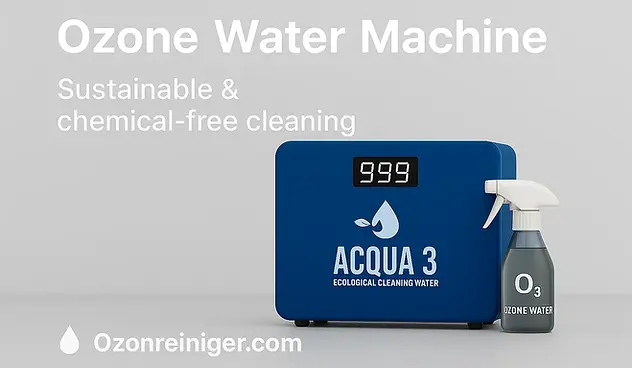
Equipment overview: Ozone water machine.
Related articles in this series
Start: ozone water in a washing machine · Programs and settings · Maintenance and self-clean cycles · Costs and consumption · Workflow implementation
Keep reading
What is ozone water? · Ozone water machine · Guides · All products (shop) · Contact