
8 jan 2026
Why organizations choose ozone water
This article explains why more organizations choose ozone water as a structural solution for sustainable surface cleaning in professional cleaning processes.
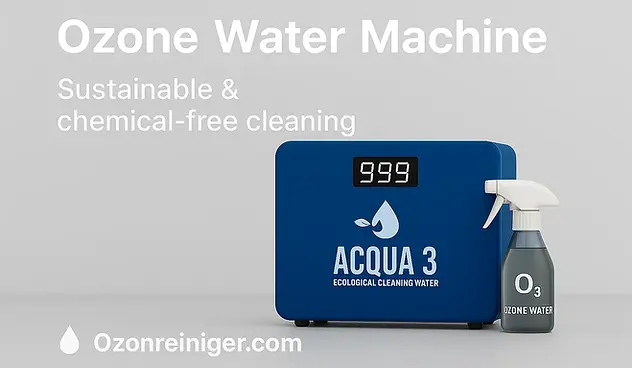
Why organizations choose ozone water: simplicity, sustainability and process control without biocide or health claims.
Why organizations choose ozone water
Why organizations choose ozone water
This article is part of the blog series within the guide Sustainable cleaning with ozone water. The focus is operational simplicity, process control and sustainability, without health or disinfectant claims.
The need for simpler day-to-day cleaning
Many organizations still work with multiple cleaning products, each with specific instructions and handling. That creates complexity in purchasing, storage, training and daily execution. In real-world operations this often leads to inconsistent outcomes: one team works differently than another, or new staff lose oversight.
Ozone water is therefore often adopted as functional cleaning water for closed surfaces, shifting the focus from product selection to a repeatable workflow.
One consistent solution for closed surfaces
Working with one solution supports standardization. For tables, worktops, floors and sanitary surfaces you can define one method, train one routine and check one set of steps. This improves predictability, especially across multiple sites.
For background on functional use, see What is ozone water?.
Fewer products means fewer mistakes
A smaller product set reduces the chance of incorrect use. Staff need to learn fewer labels, fewer instructions and fewer exceptions. This can improve reliability and speed up onboarding, especially when shifts rotate or teams change.
For a process-focused deep dive, read Simplify cleaning processes.
Sustainability without adding complexity
Many organizations want to reduce waste and improve sustainability, but prefer solutions that do not add extra steps. Because ozone water is generated on site, dependence on bottled products, transport and storage can decrease. This can support sustainability goals while keeping routines practical.
For policy context, see Ozone water and ESG/MVO.
Lower logistics and more predictable planning
With an ozone water machine, cleaning water is produced on site from tap water. This can reduce logistical pressure: fewer deliveries, less storage, and fewer empty containers. Operationally, that often means fewer disruptions and clearer planning.
Embedding work agreements with a fixed workflow
Consistency matters. A practical way to embed a standard is a fixed workflow such as the two-cloth method: use cloth A to clean and cloth B to dry immediately. This supports controlled application and helps keep results consistent on closed surfaces.
The steps are described in the Two-cloth method.
Related deep-dive articles in this series
Continue within the same guide with these related articles:
Ozone water vs traditional cleaning agents
How ozone water cleaning works in practice
Sustainable cleaning in holiday parks and recreation
Cost and affordability
Variable costs for self-produced ozone water are typically very low (for example around €0.0017 per liter, as an indicative reference). For many organizations the key benefit is predictability: fewer ad-hoc purchases and a simpler product landscape. Maintenance depends on use and environment; plan periodic checks to support stable operation.
- Indicatively low variable cost per liter of cleaning water
- Fewer product streams and less storage
- One routine that is easier to train and monitor
Customer stories & testimonials
- Teams benefit from one clear daily workflow.
- Fewer products improve clarity and reduce misunderstandings.
- New staff onboarding becomes faster through standardization.
💬 Want to explore how this can fit your organization? View options or contact us.
Further reading
Back to the guide
All products (shop)
Contact