
Jan 25, 2026
Maintenance: Ozone Water vs Osmosis Water for Stable Surface-Cleaning Routines
How maintenance actually affects uptime, labor time, and consistency when you use ozone water or osmosis (RO) water for professional surface cleaning workflows.
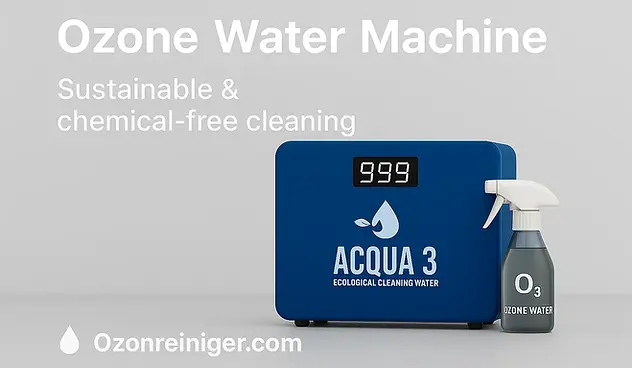
Maintenance of ozone water vs osmosis water: service routines, filters and membranes, downtime risks, and practical checklists for stable professional surface cleaning.
Maintenance that keeps routines predictable: choose the system your team can sustain
Maintenance is a workflow choice, not a technical footnote
In professional surface cleaning, maintenance determines whether your routine stays predictable: same steps, same timing, same finish—shift after shift. When maintenance is heavy or unclear, teams compensate with extra passes, delayed cloth changes, or inconsistent technique. That “hidden labor” is usually what drives total cost.
Scope note: everything on this page is strictly about surface cleaning. No claims about consumption or medical use.
What teams mean by “low maintenance”
In practice, “low maintenance” has three operational meanings: easy daily start‑up, few interruptions, and clear service planning. A system can look great in a demo, but still fail in production if it requires constant monitoring that gets skipped on busy days.
Ozone water: maintenance concentrated around the generator
Ozone water is typically produced on demand and used immediately in the round. That shapes maintenance in a workflow‑friendly way: the operational focus stays on one production unit and a repeatable routine, instead of a long chain of consumables.
Typical maintenance tasks that stay predictable
- Readiness check: confirm the unit is operating as expected before the round starts.
- Runtime‑based planning: service and replace wear parts based on usage patterns.
- Clean routine discipline: keep steps identical across shifts so results don’t depend on individuals.
Visible surfaces like glass and stainless steel are where teams most often blame “the system” for streaks. In reality, the deciding factor is usually cloth logic. A simple standard is the two‑cloth method: wipe with cloth A, immediately dry with cloth B. When this is trained consistently, teams get a repeatable finish without adding complexity.
Osmosis (RO) water: maintenance spread across filters, membranes, and flushing
Osmosis water (RO water) relies on filtration and membranes. It is often used as a finish step where the final visual impression matters most. Maintenance is therefore not only scheduled service, but also ongoing operational care: replacement cycles, flushing routines, and throughput monitoring.
Where maintenance becomes workload
- Filters: recurring changes and inventory planning.
- Membranes: performance depends on condition and correct upkeep.
- Flushing cycles: necessary, but they consume time and reduce availability.
- Throughput checks: if flow drops, the finish step disrupts your timing.
The operational risk is drift. As components age, throughput and finishing consistency can change gradually. If that drift is not caught early, teams compensate with extra wiping or waiting—turning maintenance into hidden labor.
Compare maintenance by impact on the round
To compare ozone water and RO water fairly, map maintenance to the way a cleaning team actually works. Use four lenses:
- Daily friction: what must someone do each day to keep the routine stable?
- Downtime risk: what can stop you unexpectedly, and how fast can you recover?
- Training burden: how easy is it to teach one standard routine to many people?
- Planning clarity: can you predict service and parts needs without guesswork?
A practical decision rule
If your operation runs high‑frequency rounds (multiple rounds, multiple shifts, multiple people), choose the approach that keeps daily friction low and outcomes consistent. That often means ozone water as the base routine. RO water can still be valuable, but treat it as a defined finish step on a short list of surfaces—so it does not become an all‑day default.
How to build a maintenance‑friendly combined workflow
Step 1: standardize zones and order
Start with a zone plan: which areas, in which order, with clear cloth change points. The more stable the round, the easier it is to see whether problems are process‑related or truly technical.
Step 2: protect visible surfaces with cloth logic
For glass and stainless steel, consistency comes from dry wiping discipline. Using the two‑cloth method reduces streak variability and keeps the finish predictable across staff.
Step 3: define a finish list (only if you use RO)
If you introduce RO water, write a short finish list (for example: entrance glass wall, reception stainless counter, mirrors in premium areas). Everything outside that list stays in the base routine. This single rule prevents RO from silently expanding and turning into a maintenance bottleneck.
Deep dive: what can break your routine and how to prevent it
Maintenance problems rarely show up as a dramatic failure. They show up as small changes that teams adapt to: a round takes five minutes longer, glass needs an extra pass, a finish step becomes “optional”, or throughput drops and people start queueing. The fastest way to prevent that drift is to name the risks and attach simple countermeasures.
Risk 1: throughput drops and the round loses rhythm
When output slows, teams either wait or they change behavior: they jump to another zone, use a different technique, or postpone visible surfaces. That destroys repeatability. If you use a system that can slow down (often a concern with filtration chains), plan for it: keep a defined finish list, schedule flushing outside peak hours, and monitor throughput as part of an operational routine—before the team feels the pain.
Risk 2: quality checks become subjective
Many “maintenance” complaints are actually subjective quality checks. One person accepts a surface, another person re-wipes it. To avoid this, define what “done” means for your environment. In high-frequency rounds, the KPI is often consistency and speed. In premium reception areas, the KPI may be visual perfection. Mixing these KPIs causes confusion and rework.
Risk 3: visible surfaces become the bottleneck
Glass and stainless steel are where inconsistency becomes obvious. The cleanest fix is procedural: wipe and dry immediately with a second cloth. If you allow surfaces to air-dry, streaks appear and teams assume the water type is wrong. That is why the two-cloth method is not a “tip”, but a workflow control. It turns finish quality into a repeatable behavior.
Risk 4: RO expands from finish step to default
In many organizations, RO is introduced for a few high-visibility surfaces. Over time, people start using it everywhere because it feels safe. This is the most common reason RO maintenance becomes a burden: more flushing, more replacements, more downtime, and more monitoring. Prevent this with one rule: RO is only used on the written finish list. Everything else stays in the base routine.
Side-by-side: maintenance tasks by frequency
Use this frequency map to compare the operational burden. The exact details depend on your setup, but the structure is consistent across most teams.
Daily tasks
- Ozone water: readiness check, confirm routine steps, ensure cloth availability for the round.
- RO water: readiness check plus awareness of capacity/throughput, and alignment with flushing and finish timing.
Weekly / monthly tasks
- Ozone water: review runtime patterns and schedule service, verify the routine is still followed across shifts.
- RO water: filter and membrane planning, flushing routine review, output quality and throughput checks.
Service planning
Service planning is where predictability matters most. If your operation has limited technical capacity, choose the option with clearer intervals and fewer surprise dependencies. Predictable service is often more valuable than peak performance on a perfect day.
Choosing the role: base routine vs finish step
The most stable design is to separate roles:
- Base routine: the method used for most surfaces, most days, by most people. This must be easy to train and easy to sustain.
- Finish step: an optional, defined add-on for a small list of premium surfaces where the visual requirement is stricter.
When you assign roles like this, maintenance becomes manageable. The base routine stays predictable, and the finish step is planned and controlled. This is also the simplest way to keep your total cost stable: you avoid adding a maintenance-heavy method to every single wipe.
Quick troubleshooting guide (surface cleaning)
Problem: streaks on glass or stainless steel
First check the routine, not the water type. Verify cloth freshness, immediate drying, and clear cloth change points. If the team applies the two-cloth method consistently and streaks remain, then review the workflow timing and whether surfaces are being over-wet.
Problem: rounds take longer over time
Measure where time is lost: start-up, output waiting, flushing, rework, or finish steps expanding. If RO is used, confirm it is still limited to the finish list. If the finish list has grown, you have found the hidden maintenance driver.
Problem: results differ by shift
This is usually a training and standardization issue. Reconfirm zone order, cloth logic, and a shared definition of “done”. A system that is easy to start and easy to use will still fail if teams are not aligned on the same routine.
Maintenance checklists you can actually run
Daily
- Confirm today’s system is ready and available before the first round.
- Ensure you have enough clean cloths and a clear cloth change plan for the round.
- If RO is used: confirm it matches the planned finish list and does not interrupt peak timing.
Weekly / monthly
- Review where the round slows down and whether the cause is process or equipment.
- Check if RO has crept into the base routine (a common hidden cost).
- Align service planning and spare parts with real usage patterns.
Service intervals
Tie service planning to runtime and throughput. The goal is not perfect theory, but predictable operations with minimal surprise downtime.
Series links and related pages
Hub: Ozone water vs osmosis water
Sub 3: Applications by environment
Further reading