
Dec 22, 2025
Ozone water explained: step by step through the concept
An explanation of ozone water differs from a definition or a meaning description in that it walks through the concept step by step and leaves room for the logic behind each step rather than only naming the final form. Anyone seeking an explanation usually wants to know not only what it is but also why it works the way it does, how it comes about and which considerations belong with it for those who want to apply it in their own working environment. This page is written as a didactic explanation and treats the topic of ozone water in a sequence that matches how an interested reader builds up the concept: from the basic question of what is actually happening, to the device behind it, to the working method in practice and finally to the considerations around use. We assume that the reader has no prior knowledge of cleaning chemistry or of technical installations and that the explanation also works for someone who has never seen the system before on the work floor or in technical literature. The tone remains sober and factual, because a didactic structure is best served by clear steps rather than by enthusiastic claims or broad promises that obscure the working of the system more than they clarify it. At the end of the page the reader has a workable picture of what ozone water is, how it arises, how it is used and which questions logically follow once the concept is clear and recognisable enough to apply in practice.
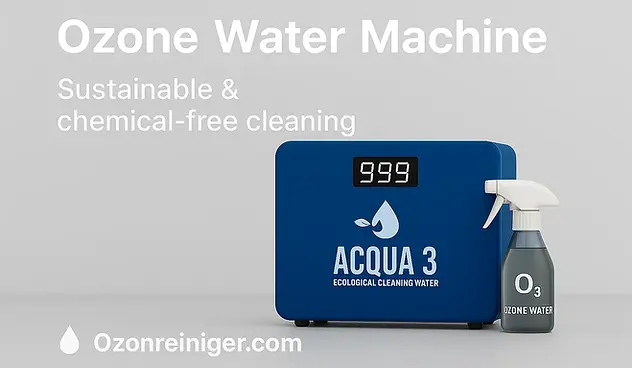
Ozone water explained step by step: from the basic question to the working method, with clear explanation of device, water and daily application on the floor.
Step by step through the ozone water concept
Step 1: a device instead of a bottle
The first step in the explanation is that ozone water does not come from a bottle. It arises in a device that is connected to the water supply. This device has the single function of briefly introducing a specific substance into the water during tapping.
What goes in is ordinary tap water. What comes out is the same water with a temporary addition that makes it briefly usable for moistening cloths in surface cleaning routines in everyday working environments across different sectors.
For those wanting to see the definition first, the page what is ozone water provides a straight technical description. The page on ozone water serves as an overview for the broader context.
Step 2: the addition is temporary
The second step is that the addition does not remain permanently in the water. After a short period it breaks down and ordinary water remains. That is not a technical limitation but a property that steers the entire working system in its design.
Because the addition is temporary, nothing can be kept in a bottle for later use. Everything done with this water happens within a defined time window after tapping. That makes the system simple to manage and predictable in daily operation across different teams.
Step 3: the device and how it works
The device itself contains no storage tank for cleaning product and no reservoir for used water. It takes water from the supply, adds something during tapping and delivers it immediately to the user without further processing in between.
A more detailed explanation of the construction and function of the device is on the ozone water machine page, where the technical build-up is explained step by step for those who want to know more about the system itself.
Step 4: water does not clean without a cloth
A common thinking error is that water by itself cleans a surface. That is not the case. Cleaning always requires mechanical removal of the dirt by a cloth or comparable material that actually carries the dirt away from the surface that needs cleaning.
The recommended approach uses two cloths in sequence. That method is described on the page about the two-cloth method, where the working sequence is laid out step by step for daily use on the work floor in any setting.
Step 5: working sequence in practice
The working sequence begins with tapping water from the device in a quantity that matches the workspace to be cleaned. A cloth is moistened, not soaked, because excess water does not improve the work and only leads to longer drying times after wiping is complete.
Next comes the wiping of the surface in a fixed direction, usually from left to right or from top to bottom. A second cloth follows for the final clean wipe that ensures a streak-free result visible during regular daily work on common surfaces.
Step 6: which working environments suit it
Not every working environment benefits equally from this system. Working environments where it fits have in common that many surfaces have to be wiped down daily and that different people work in rotation on the same routines across the working floor.
Typical examples are hospitality kitchens, offices, gyms, hair salons and care locations. For specialised tasks such as cleaning heavily greased installations, traditional products remain relevant within a broader cleaning plan with multiple methods per type of workspace.
Step 7: what changes in the working routine
The introduction of ozone water requires a few days of adjustment from the team. Those who previously worked with bottles automatically look for the same working order and need to learn that the device replaces the bottle and that cloths get their fixed spot near it.
After this short adjustment period, the routine flows on its own and the working picture on the floor becomes calmer. Fewer items are set out, there is less discussion about which product is for what task and rotating staff settle into the working structure faster.
For additional background on working routines, the ozone cleaner guides offer more pages with practical information about different working situations and the matching application.
Step 8: the added value for management and procurement
A didactic explanation does not stop at how it works but also shows where the added value lies for the organisation. For management and procurement, that is mainly the disappearance of bottle stock, dosing instructions and varying cleaners per type of workspace.
There is no longer any stock management needed for cleaners in various strengths. What remains is the regular maintenance of the device and the management of cloths that are washed or replaced on a fixed schedule during normal working moments across the team.
Step 9: frequently asked questions during onboarding
During onboarding, almost always the same questions arise. A first question concerns the temporary nature of the addition: is the water still effective if I walk through the entire office wing? The answer is that a short walking period falls within the time window and is no problem at all.
A second question concerns whether it works on all surfaces. The answer is that it fits regular surfaces such as worktops, counters, tables and chairs, but that some specific tasks still require traditional products matching that particular cause and situation in detail.
Step 10: how the explanation flows into daily use
A didactic explanation only really sticks when the steps are linked to daily use. Practice shows that readers remember the steps faster when they are discussed again a day later in the context of a concrete workspace or working routine on the floor.
A short repetition during a morning moment often works better than an extensive explanation in a single session. Step by step the concept is internalised, and only when the steps are used automatically in sentences is it truly understood by the employee in everyday situations.
Step 11: from explanation to independent application
After the first weeks, an employee can usually handle the explanation independently. That means less need for guidance and that new questions become focused on specific situations that were not covered extensively in the basic explanation given earlier on.
At that point the explanation shifts from general to specific. What was earlier a general introduction becomes a reference framework on which new questions are projected, such as questions about specific surfaces, about working pace and about how cleaning routines align with each other in practice.
Step 12: what a good explanation deliberately avoids
A good didactic explanation avoids overloading with details that the reader does not yet need at this stage. Too much technical information at the beginning is counterproductive because it buries the core thought under layers of detail and creates confusion in the working team.
The steps described above form the minimum needed to understand the concept. Additional details are available on other pages within the guide and can be consulted in a targeted way when there is need for it in a specific working situation later on.
Step 13: how the explanation builds team confidence
A stepwise explanation also affects confidence within the team. When everyone knows the structure and can use it in sentences, a sense of security emerges among new employees who can rely on the explanation during their first working weeks in the new role.
That confidence matters more in the long run than memorising individual terms. It keeps the team calm in unclear situations and allows them to fall back on the familiar structure, instead of being thrown off by isolated details unrelated to the working routine itself.
Costs and affordability
The cost structure of ozone water differs from that of traditional products because there is no continuous purchase of liquids. The investment lies in the device itself, while the running cost is limited to water and electricity in regular daily operation.
For organisations that spend a lot on cleaning products each year, this can be an attractive model. A conversation about the practical setup is available via get in touch, where the working environment can also be discussed.
Testimonials from practice
💬 A cleaning employee in an office building notes that the step-by-step explanation helped to understand the working principle in a single conversation. Especially the insight that a cloth is always needed gave a different picture than earlier information had suggested.
A kitchen chef notes that the steps were easier to remember when presented in this order. The link between device, water and cloth became clear and the team could start the working routine without further explanation needed afterwards.
In a gym, the owner noted that new employees pick up the explanation in steps faster than a flowing narrative. The steps can be repeated later in conversations when someone has a specific question about a particular part of the working method during regular daily routines.
Further reading
Those wanting to see the explanation from a different angle can find on ozone water meaning an account focused on the use of the term in language. The page what is ozone water definition covers the question as new users typically pose it.