
8 dec 2025
Ozone water: what it is and how to use it safely
This guide explains in clear language what ozone water is, how it is generated and how to use it safely as cleaning water for surfaces.
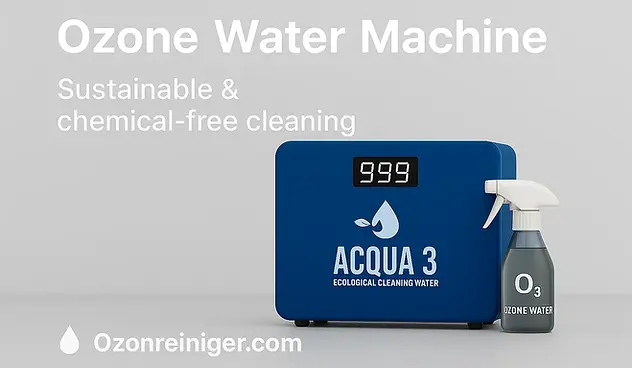
What is ozone water exactly? Learn how it is produced, where to use it in daily cleaning and which safety agreements to make with your teams.
Ozone water explained in simple terms
Ozone water: what it is
Ozone water is tap water that is briefly treated inside an ozone water machine or ozone water device so it becomes active cleaning water for a limited time. You use it only for surface cleaning on closed, wipeable materials, not as drinking water or as a medical product. It is cleaning water, not intended for consumption or medical applications.
1. Ozone water in simple words
In ozone water a small amount of ozone is brought into the water and then you use that water within a short time frame for cleaning. After roughly 15 to 30 minutes its activity decreases and the water returns to normal tap water. You generate it when you are about to clean, so you do not need separate bottles or mixing steps.
For staff you can describe ozone water simply as “our base cleaning water that we make ourselves”. In all communication you stay clear: it is not drinking water and not a replacement for drinking water or products that fall under medical regulations.
For a short introduction you can refer to What is ozone water? where the core is summarised.
2. How is ozone water generated?
An ozone water machine or device is connected to the water supply. Inside the housing the water is treated and at the outlet you receive directly usable cleaning water. In practice this means:
- You feed tap water into the unit.
- The unit converts it into ozone water inside the device.
- You use the water straight away for surface cleaning.
Because the technique stays inside the casing, cleaning staff do not need to think about separate dosing or mixing. For more technical detail you can read the guide Ozone water machine.
3. Where do you use ozone water in daily cleaning?
You use ozone water on closed, wipeable surfaces that you clean regularly. Examples are tables, counters, chair arms, door handles, wheelchairs, bed rails, tiles and floors. It fits well in daily routines for hospitality, healthcare, retail, sports and facility teams.
The in-depth articles in this guide explain each topic further, for example Where to use ozone water and How to clean with ozone water. Together they form a complete blog series around this subject.
4. Workflow: working with ozone water and the two-cloth method
Spray onto the cloth for controlled application, or directly onto closed surfaces such as tables, floors or tiles. Workflow: two-cloth method — 1) Mist a light layer onto the surface. 2) Clean in overlapping strokes. 3) Dry immediately with cloth B for a streak-free result. Work from clean to less clean: touchpoints → furniture → wet areas such as bathrooms.
- Always use two clearly separated cloths (cloth A for damp cleaning, cloth B for drying).
- Refresh ozone water regularly so you stay within the active time window.
- Train new staff using the same fixed sequence.
The full workflow is described in the guide Two-cloth method, so everyone follows the same steps.
Costs and affordability
At roughly €0.0017 per litre, not even one fifth of a cent, you produce your own cleaning water from the tap – about one cent per full bucket.
- No expensive bottles or logistics
- Less plastic and storage
- Chemistry-free surface cleaning
- Simple to operate
- After around 1000 hours or 500,000 litres, maintenance is needed, on average about €75 in parts.
Customer stories & testimonials
- “One solution for many surfaces; fewer product variants to manage.” – Facilities
- “Ready-to-use water on site, no extra mixing steps.” – Service provider
- “New team members quickly understand the routine thanks to the two-cloth method.” – Cleaning team
💬 Get started: View all products or contact us.
Articles in this guide
This guide contains a series of in-depth blogs on ozone water. You can explore for example:
How an ozone water device works
How much does ozone water cost
Further reading