
8 dec 2025
Is ozone water drinkable? What you should know
This guide explains why ozone water in our applications is not drinking water, what happens in the water and which agreements to make with your teams.
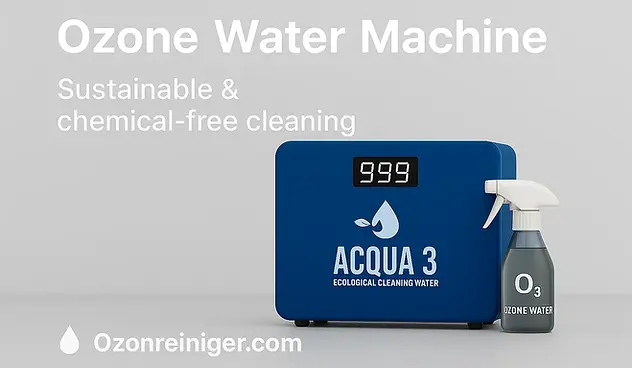
Is ozone water drinkable? Learn why it is used as cleaning water in practice, does not replace drinking water and which safety rules are important.
Is ozone water drinkable in daily practice
Is ozone water drinkable?
In our applications the answer is clear: no, ozone water is not drinking water. It is used as cleaning water for closed, wipeable surfaces and described that way in all work instructions.
1. What do we mean by drinkable?
Drinking water is water that is continuously monitored, safeguarded and supplied by water utilities and authorities. It complies with legal standards, is tested on many parameters and is independent from daily cleaning tasks.
Ozone water, by contrast, is generated on demand in an ozone water machine or device and has a limited active lifetime. Its activity decreases over roughly 15 to 30 minutes. It is designed as cleaning water, not as a structural drinking water source.
The technical background is explained in the hub What is ozone water and in How an ozone water device works.
2. Why we use ozone water as cleaning water
In daily practice you use ozone water to clean closed, wipeable surfaces using the two-cloth method. Examples include tables, counters, door handles, wheelchairs, bed rails and tiled floors.
- Clear purpose: one base cleaning water for many daily rounds.
- On demand: you generate it when you are about to clean.
- Limited active time: you use it directly, not for drinking.
The guide Where to use ozone water shows practical examples per area.
3. What about ozone in drinking water treatment?
Ozone can be used as part of a treatment step in professional drinking water plants, under strict control and with different aims than in a local cleaning device.
- Water utilities work with dedicated installations, laboratories and legal standards.
- Water quality is monitored and documented continuously.
- Private “experiments” with drinking water fall clearly outside this context.
For everyday use the rule is simple: follow the advice of your water utility for drinking water and use ozone water as intended – as cleaning water.
4. Clear agreements for teams
To avoid confusion, formulate short, repeatable agreements for everyone:
- Do not drink: ozone water is not drinking water.
- Not for wounds: do not use it on open wounds or directly on mucous membranes.
- No replacement: it does not replace regular drinking water or medical disinfectants.
These agreements align with the guide Is ozone water safe, which covers general safety conditions.
5. What if someone accidentally takes a sip?
Accidents can happen. If someone accidentally ingests a small amount, follow your organisation’s standard safety procedures:
- Have the person rinse the mouth with clean water and spit it out.
- Follow internal instructions (for example company doctor, safety card or emergency number).
- If symptoms or doubts arise, contact a medical professional or the local poison information service as advised in your country.
Do not give medical advice yourself beyond these procedures. Define clearly who takes which steps in your work instruction.
6. Including ozone water in your work instructions
In written work instructions you can summarise the core in one short paragraph, for example:
- “Ozone water is our base cleaning water for hard surfaces. It is not for drinking, not for wounds and not a replacement for drinking water or medical products.”
Combine this paragraph with the workflow in How to clean with ozone water and the Two-cloth method.
Links to the rest of the series
This Q&A is part of the series around what is ozone water. For a complete picture also read:
How an ozone water device works
How much does ozone water cost
Further reading