
24 jan 2026
Ozone Water vs Osmosis Water for Surfaces: what fits your workflow?
This hub explains the practical differences between ozone water and osmosis (RO) water for professional surface cleaning—so you can choose by workflow, not by hype.
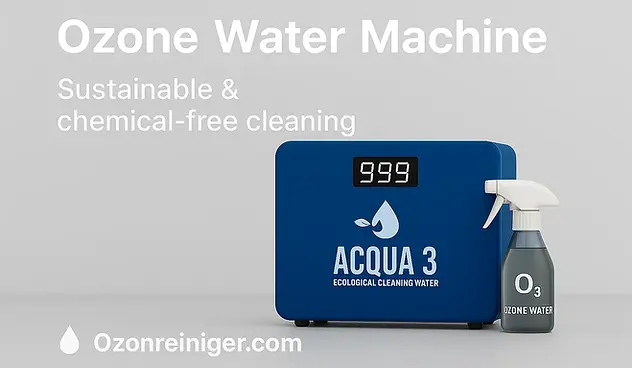
Ozone water vs osmosis water for surface cleaning: compare workflow, finish, costs and maintenance. Practical steps plus links to the full blog series.
Ozone water vs osmosis water: choose by workflow (surface cleaning only)
Ozone water vs osmosis water for surfaces: what are you really comparing?
Both ozone water and osmosis (RO) water can be used in professional surface cleaning, but they support different kinds of routines. The most reliable way to choose is not “which water is better”, but which workflow you want to run: the order of zones, the cloth strategy, the finishing step, and how you keep results consistent across people and shifts.
Important: this hub is surface cleaning only. It is not intended for consumption or medical use.
What ozone water is in day‑to‑day routines
Ozone water is typically produced on demand and used immediately during the cleaning round. That makes it a natural fit for high‑frequency routines where teams need speed, repeatability and simple training. Instead of adding extra handling steps, you build the process around clear sequence and clean cloths.
In many businesses, ozone water becomes the “standard round” solution: contact points, hard surfaces, furniture, wall sections and sanitary-adjacent areas where you want the same steps every time. When the workflow is stable, quality is easier to manage because outcomes depend less on individual preferences and more on the shared routine.
What osmosis (RO) water is usually used for
Osmosis water is filtered through membranes to reduce dissolved solids. In practice, it is often chosen for finishing—especially where the visual result on glass and stainless steel is the main KPI. The important point is that filtration brings an operational chain: filters, membranes, flushing cycles, capacity planning and quality checks. That chain can be excellent when it is well-managed, but it adds workload and potential downtime.
For many teams, RO water works best as a defined finishing step on a limited list of “show surfaces”, rather than as the default for every surface in every round.
Glass and stainless steel: ozone water can be the stronger default
It is common to hear “RO water is for glass and stainless steel”. In real operations, ozone water can perform extremely well on glass and stainless steel—often better in total workflow terms—because it cleans quickly and does not rely on a filtration chain. The real lever is the cloth routine: clean with one cloth, then immediately dry with a second cloth. That step reduces streaking and keeps the finish predictable for teams.
Use a fixed routine such as the two‑cloth method: wipe with cloth A, then dry-wipe with cloth B. When teams follow the same sequence and change cloths on time, glass and stainless steel can stay clear and consistent without constantly switching systems.
RO water still has a role: if you want a maximum finish as a separate step on a small set of critical surfaces, you can add RO as a controlled finishing pass. The key is to keep it defined, so it does not silently take over the whole round and inflate maintenance and handling costs.
Decide on 4 practical points
- Result goal: fast, consistent round results—or maximum visual finish on a few show areas?
- Frequency: multiple rounds per day (process stability) or occasional detail work (finish stability)?
- Maintenance tolerance: routine checks and scheduled service—or filter/membrane management and flushing cycles?
- Logistics: make and use water within the round—or produce, store and distribute RO water capacity?
How to keep results stable in real teams
Most quality problems are not caused by the “wrong water”, but by inconsistent steps: changing order, reusing the same cloth too long, skipping the dry-wipe on glass and stainless steel, or mixing routines across shifts. Start with a simple, teachable baseline:
- Define zones and sequence (always the same order).
- Define cloth roles (cleaning cloth vs drying cloth).
- Define change points (when cloths are replaced).
- Define a short finish list (only if you add RO water as a final pass).
Where each option tends to fit best
Ozone water is often the best default when you run frequent rounds across many contact points and hard surfaces, and when you need results to be repeatable across multiple people. It can also be highly effective on glass and stainless steel when paired with the two‑cloth routine and consistent dry-wiping.
RO water often fits best when you treat it as a finishing module on a small set of showcase surfaces, and when you accept the extra maintenance and capacity planning that filtration systems require.
Articles in this blog series
Use these deeper articles to build your decision and translate it into a workflow:
Costs comparison: ozone water vs osmosis water
Maintenance & uptime: what each system demands
Applications by environment: where each fits best
Workflow decision: make routines followable for teams
Further reading